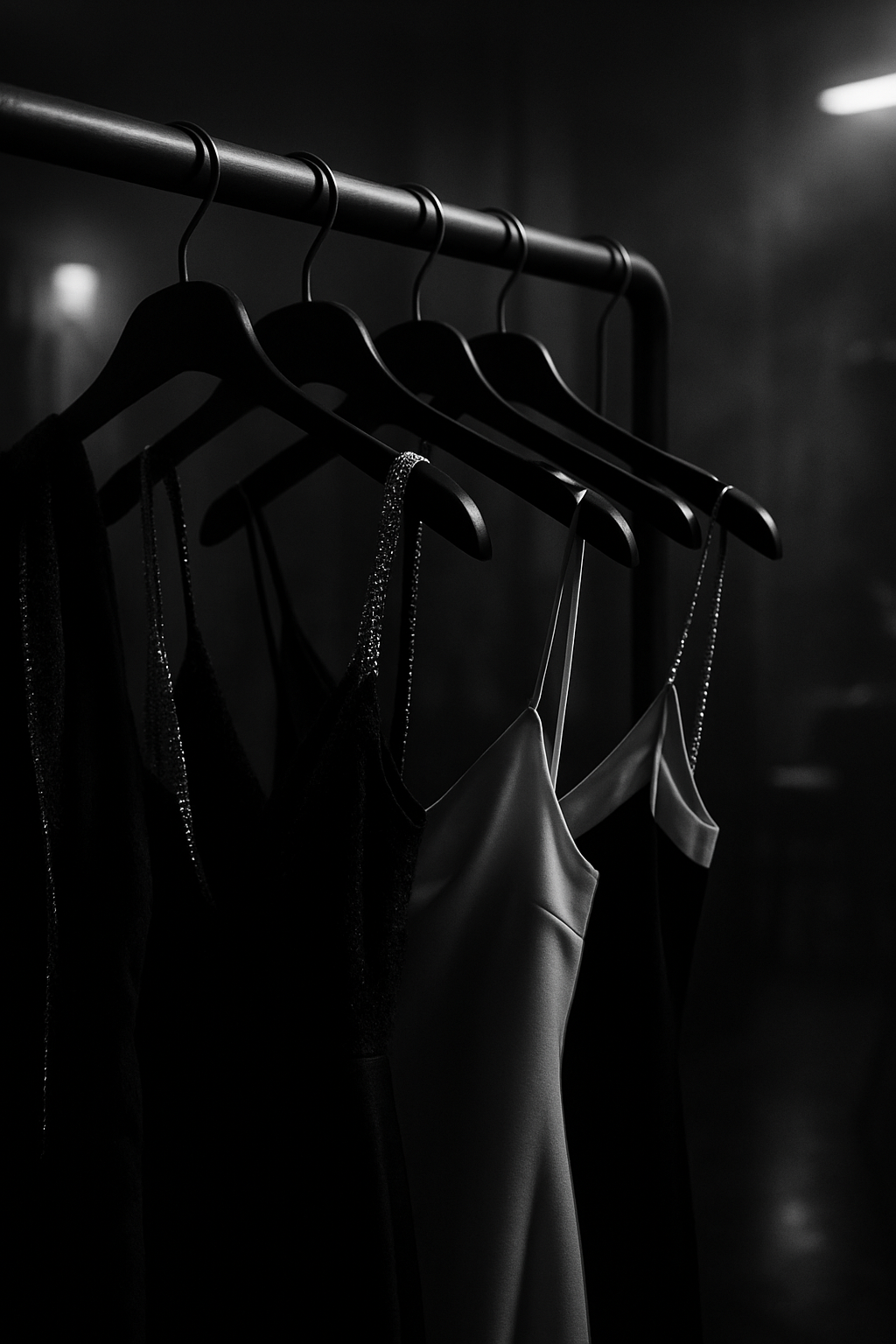
Finding personal style starts with evidence, not invention: collect thirty to fifty images you're genuinely drawn to, find what repeats across them — silhouettes, colors, moods — and translate the pattern into a short list of rules. Then wear-test those rules for two weeks using only what's already owned, before a single new purchase.
Personal style gets sold as something to be discovered elsewhere — a quiz, an archetype, a celebrity to copy. The more reliable version is archaeological: the taste already exists, in the photos saved without thinking and the three outfits that get repeated when nobody's watching. The job is reading the pattern, not inventing one.
Start with the evidence pile. Thirty to fifty images, gathered fast and uncritically — screenshots, saved posts, film stills, a stranger's coat. Volume matters because the pattern only shows at volume: one saved slip dress is a mood, eleven is a data point.
Then read the pile the way an editor would. What silhouette keeps appearing — fitted, fluid, structured? What palette — earthy, inky, washed-out? What's the mood in one honest word? Most piles collapse into two or three findings, and the findings are usually narrower than expected. That's good. Narrow is usable.
Before buying anything, wear-test. Two weeks, using only the current closet, dressing as close to the pattern as possible. Some findings survive contact with a real Tuesday and some don't — the fantasy of the pattern and the life being lived have to meet somewhere, and the wear test is where. Only after that does a shopping gap become worth filling.
The test runs faster on screen than in the mirror: render the pattern's outfits on your own photo in Draped, including the versions that feel like a stretch, and find out which findings hold before the two weeks are even up.
The formula
The evidence pile
Thirty to fifty saved images, gathered uncritically. The pattern needs volume to show.
The editor's read
What silhouette, palette, and mood keep repeating — usually two or three findings, not ten.
The wear test
Two weeks, current closet only, dressing as close to the pattern as possible.
The gap list
Only what the surviving pattern actually needs — written after the test, not before.
See it on you, not a model
Draped renders personal style on your own photo before you buy a thing. Invite-only beta, opening up slowly.
Get the beta inviteQuestions people actually ask
What if my saved images are all over the place?
They rarely are — the variety is usually surface-level. Look one layer down: ten different outfits that all share clean lines and a muted palette are one finding, not ten. If a genuine split remains, that's a wardrobe with two registers, which is common and workable.
Do I need to buy new clothes to have a personal style?
No — the wear test exists precisely to prove the style with what's already owned. Most people find the pattern was already half-present in their closet; the shopping list afterward is usually five pieces, not fifty.
How long does finding a personal style actually take?
The image mining and pattern reading fit in an afternoon. The wear test takes two weeks. What takes longer is trusting the result enough to stop second-guessing it — which is exactly what the evidence pile is for.