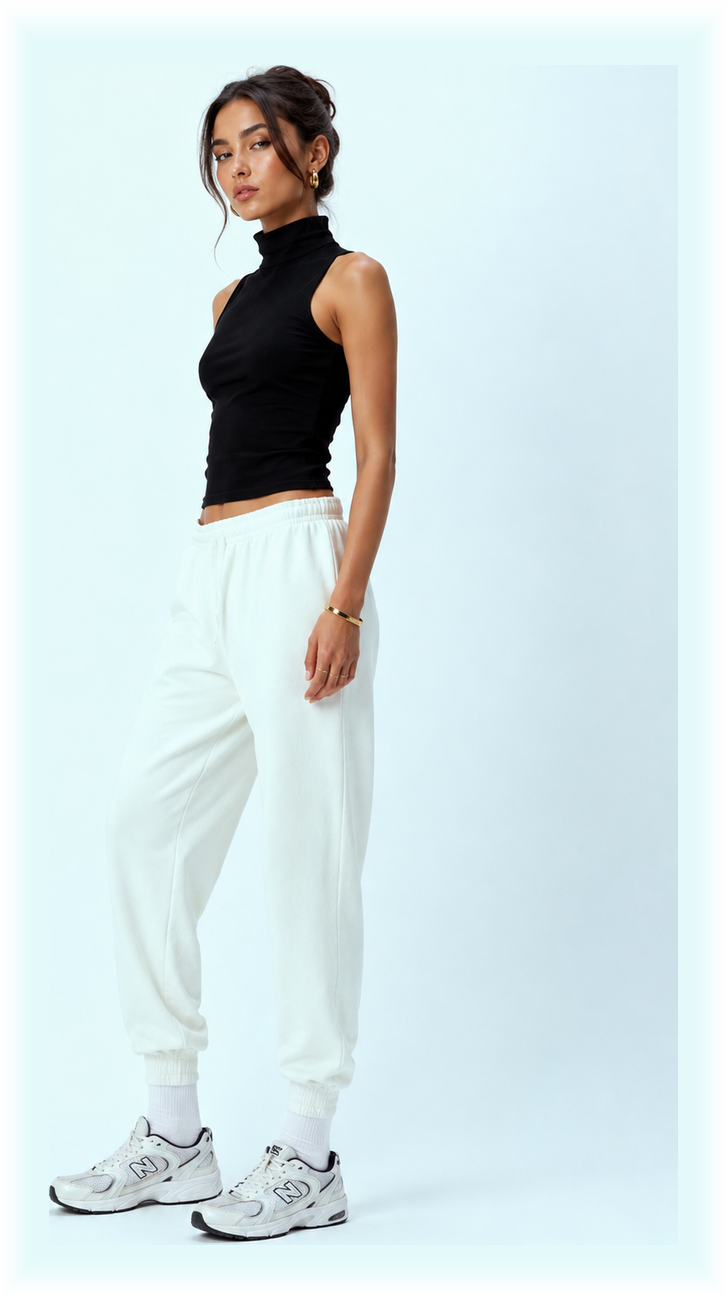
Video-call dressing concentrates effort above the collarbone: a solid, mid-toned top (skip pure white and busy patterns, which read poorly on camera), a clean neckline, and one polish detail — real jewelry or hair pulled back with intention. Below the frame, comfort wins, as long as you'd be fine standing up unexpectedly.
A video call outfit is really a top and a decision about how much effort to put into a frame that ends at the collarbone. That's not a loophole to skip dressing entirely — a camera reads a wrinkled tee or visible pajama collar just as clearly as it reads a considered one — but it does mean the effort can be concentrated where it's actually seen.
Solid, mid-toned colors read best on most cameras; pure white can blow out under office lighting, and small, busy patterns tend to shimmer distractingly on a webcam feed the way they wouldn't in person. A simple knit, a blouse with a clean neckline, or a structured collar all photograph as put-together without needing anything elaborate.
One small styling choice does most of the work here: real jewelry instead of none, or hair pulled back with intention rather than not touched at all. It reads as effort was made, which matters more on a call than most people assume — cameras are unflattering by default, and a little polish counters that.
Below the frame, comfort wins outright — joggers, leggings, whatever the day actually calls for. The only real rule: something you won't have to stand up in unexpectedly, since every video call eventually has that moment.
A top that reads sharp in the bathroom mirror doesn't always read the same way through a laptop camera, under office-grade fluorescent light. Render it against your own photo first, before the first call of the day, and skip the mid-meeting surprise entirely.
The formula
The top
A solid, mid-toned knit or blouse — nothing pure white, nothing busy-patterned.
The neckline
A clean crew, V-neck, or collar — it reads more finished on camera than a stretched-out neckline.
The polish detail
Real jewelry or hair pulled back with intention.
Below the frame
Whatever's comfortable — just something you'd be fine standing up in.
See it on you, not a model
Savi renders work on your own photo before you buy a thing. Free to join.
Create your accountQuestions people actually ask
What colors work best for a video call?
Mid-toned solids — navy, forest, burgundy, a warm gray — read most reliably on camera. Pure white can overexpose under office lighting, and busy patterns tend to shimmer on webcam feeds.
Does it matter what I wear below the camera frame?
Only in the sense that you should be comfortable standing up in it unexpectedly — otherwise, comfort wins completely below the frame line.
Is it worth putting on real jewelry for a call from home?
It's a small effort with a real payoff — a single piece reads as considered on camera, and it's usually the fastest way to feel more put-together for a day of calls with no commute in between.