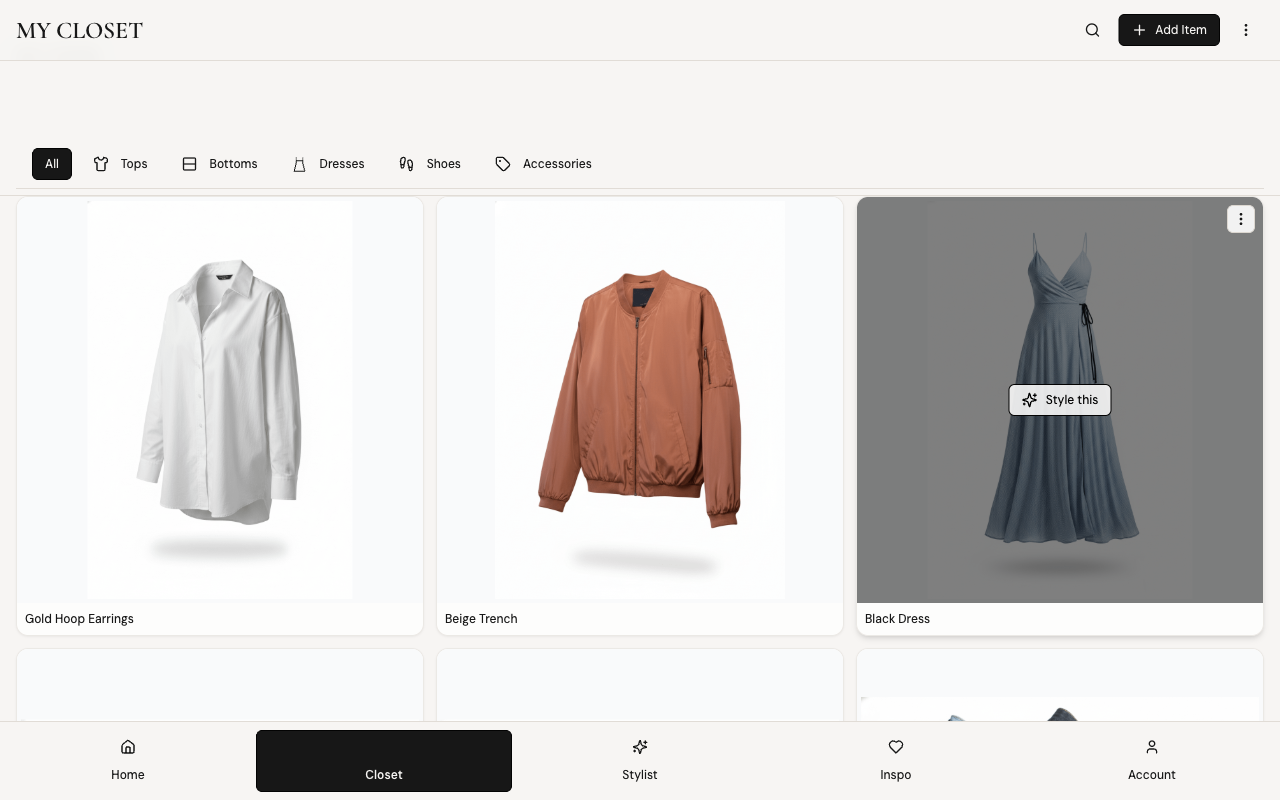
Organize a closet by category first — tops, bottoms, layers, dresses — then by color within each category, with the current season at eye level and off-season pieces stored elsewhere. The system's real job is visibility, not perfection: pieces that can't be seen don't get worn, and any arrangement that takes effort to maintain won't survive a normal week.
Organizing a closet is a different job from auditing one, and the two get collapsed constantly. An audit decides what stays — that's a judgment exercise, covered in its own guide. Organizing is what happens to the survivors: where each piece lives, in what order, and how the current season stays reachable while last season doesn't crowd it.
Category comes first because it matches how outfits actually get built. Tops together, bottoms together, dresses, layers, then shoes — the morning question is always 'which trouser,' never 'which of these forty mixed hangers.' Within each category, order by color, light to dark. It sounds fussy and takes ten minutes; the payoff is that a specific piece can be found without pulling three others out with it.
Height is the quiet variable. Eye level belongs to the current season and the most-worn pieces — that band of rail and shelf that gets seen every single morning. Off-season goes high, low, or into a separate box entirely, and the swap happens twice a year, not piece by piece. A closet where July and January hang side by side is half dead weight at any given moment.
The hardware matters more than it should: matching slim hangers buy back a third of most rails, and a shelf divider or two stops the knit pile from becoming a knit heap. None of it needs to be bought all at once — but a system that fights the physical space always loses to one that works with it.
The same principle runs Draped's closet: every piece photographed once, visible in one grid, ready to try on your own photo — so the question of what's actually in there never again depends on what's reachable from the doorway.
The formula
The category sort
Tops, bottoms, dresses, layers, shoes — grouped the way outfits actually get built.
The color order
Light to dark within each category. Ten minutes of fussy, months of findable.
The eye-level rule
Current season and most-worn pieces in the sight line; everything else high, low, or boxed.
The seasonal swap
Twice a year, all at once — not a slow drift of summer into winter.
The hardware
Matching slim hangers and a divider or two. Small spend, a third of the rail back.
See it on you, not a model
Draped renders wardrobe on your own photo before you buy a thing. Invite-only beta, opening up slowly.
Get the beta inviteQuestions people actually ask
Should I organize my closet by color or by category?
Both, in that order — category first (tops, bottoms, layers), then color within each category. Color-only looks beautiful but makes finding a specific black trouser slower, not faster.
What do I do with off-season clothes if I have one small closet?
One labeled under-bed box or a top-shelf bin is enough. The point isn't distance — it's keeping the everyday sight line reserved for pieces that are actually in play this season.
How long should a full closet reorganization take?
Two to three hours if the auditing is already done. If deciding what stays is happening at the same time, it's two separate sessions — judgment and arrangement are different jobs, and mixing them is why closet projects stall at the pile-on-the-bed stage.