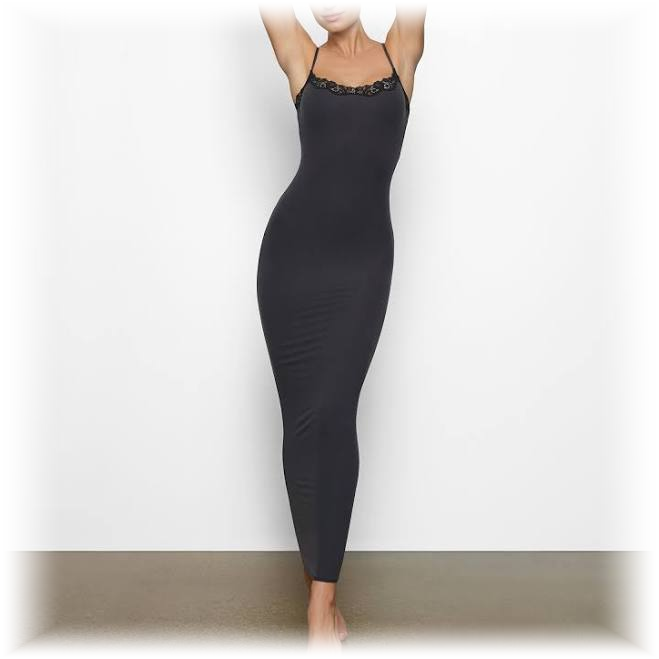
Modern body-type dressing uses three tools: line (echoing the body's natural lines — angular or curved — in the clothes), proportion (choosing where hems, waists, and breaks land, since every horizontal edge draws the eye), and balance (playing volume against structure rather than volume against volume). None of it is about concealment — it's about outfits that look deliberate because they agree with the body wearing them.
The old body-type canon — fruit shapes, problem areas, a list of hemlines assigned like prescriptions — deserved its retirement. It framed dressing as damage control, and it produced closets full of 'flattering' clothes nobody loved. But the overcorrection, that bodies and clothes have no relationship at all, throws out something real: some outfits agree with a given body and some argue with it, and the difference is learnable.
The first tool is line. Bodies lean angular, curved, or somewhere between, and clothes carry lines of their own — a sharp lapel, a bias drape, a boxy crop. Echo generally beats opposition: angular frames tend to wear crisp tailoring like it was drafted on them, while curve tends to make soft, fluid cuts look expensive. (This is the useful core of the Kibbe system, covered in its own guide — worth a read, not required here.)
The second tool is proportion. Every horizontal edge in an outfit — hem, waistband, sleeve break, boot shaft — is a line the eye stops at, and where those edges land changes the read of everything between them. A wide-leg trouser breaks differently over a heel than a flat; a jacket that ends at the hip tells a different story than one ending mid-thigh. None of these placements is right or wrong — but they're choices, and making them on purpose is most of what 'looks put together' means.
The third tool is balance: volume plays best against structure. An oversized knit over a slim trouser, a full skirt under a fitted top — one generous element and one anchored one. Head-to-toe volume is a real look and a deliberate one, but as a default it hands the silhouette entirely to the clothes. The one-plus-one version keeps the person legible inside the outfit, whatever the body underneath.
All three tools are testable without a single purchase: render the same piece on your own photo in Draped at different proportions — tucked and not, cropped and long, over heel and flat — and watch what each choice does. The mirror takes an afternoon; the render takes a minute.
The formula
The line echo
Angular frames in crisp tailoring, curve in fluid cuts — echo beats opposition as a default.
The proportion pass
Every hem, waist, and break is a horizontal line the eye stops at. Place them on purpose.
The balance rule
One generous element, one anchored one. Volume against structure, not volume against volume.
The anti-rule
Nothing is off-limits — any 'rule' that starts from hiding something gets ignored.
See it on you, not a model
Draped renders style basics on your own photo before you buy a thing. Invite-only beta, opening up slowly.
Get the beta inviteQuestions people actually ask
Are the old body-shape categories (pear, apple, hourglass) still useful?
Barely — they reduce a body to one ratio and then prescribe camouflage for it. Line, proportion, and balance describe more, apply to everyone, and don't start from the premise that anything needs hiding.
What does 'flattering' actually mean?
Historically it meant 'makes you look smaller,' which is a poor goal to build a wardrobe on. The better definition: the clothes and the body agree — the lines echo, the proportions are chosen, and the outfit looks like a decision rather than an accident.
Can I wear trends that supposedly don't suit my body type?
Yes — adapt the trend's proportion instead of skipping it. Nearly every trend exists at multiple lengths, rises, and volumes; the version that agrees with your lines is usually one adjustment away from the version on the runway.